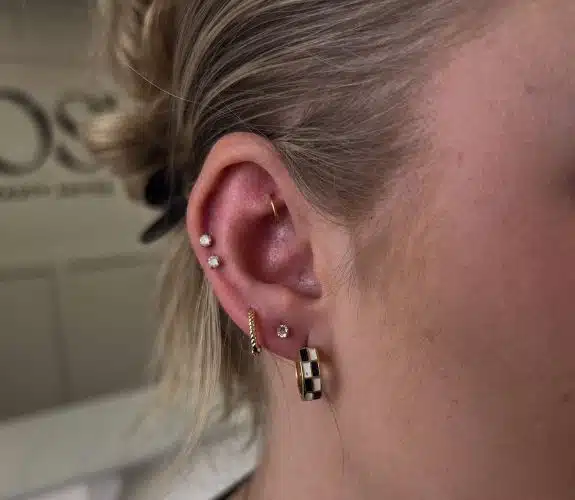
Lobe piercing
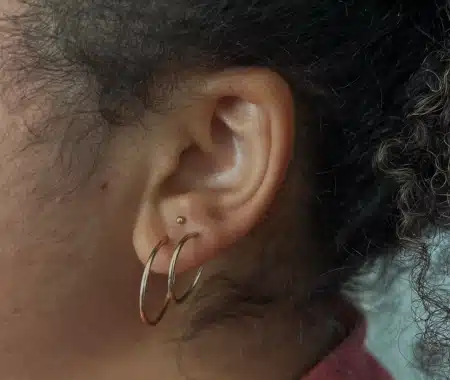
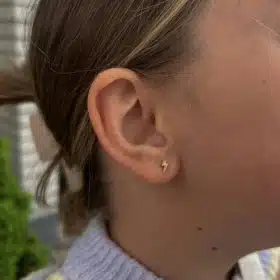
$50 single, $75 pairFirst, second and third lobes. Extra lobes are spaced up and out toward the edge of the ear so each piece has room and nothing crowds once you add hoops later. We pierce lobes from age five.
Hollow needle piercing in American Fork
Ten placements on the ear, plus nose piercings, all done with a single-use hollow needle at our studio on Main Street in American Fork. Browse the options below, or book an appointment and we'll map out what the piercings will look like on your ear before we pierce.
Grouped by where they sit
All the types of ear piercings we do fall into three areas of the ear, and each area heals and wears a little differently. Prices below are per piercing. Child pricing and jewelry changes are on the full price list.
Soft tissue, no cartilage. The quickest healing on the ear and the usual first piercing.
First, second and third lobes. Extra lobes are spaced up and out toward the edge of the ear so each piece has room and nothing crowds once you add hoops later. We pierce lobes from age five.
Cartilage along the edge of the ear, from just above the lobe up and around to the front.
The short stretch of cartilage between the lobe and the helix. It fills the gap in a stack that already has lobes and a helix, and a small stud sits neatly there.
The upper outer rim. Wear one on its own, run two or three along the curve, or pair it with a flat for a fuller look at the top of the ear.
The wide, flat plane just inside the upper rim. There's more surface here than anywhere else on the ear, so it handles a larger flat-back stud or a small cluster well.
The small ridge where the top of your ear meets your face. Two or three in a short vertical line is the classic version, and the size of the ridge decides how many fit.
The folds and ridges inside the rim. These depend most on anatomy, so we check your ear before we mark anything.
The small flap of cartilage in front of the ear canal. A single stud here is a small piece that changes the whole look of the ear.
The raised bump across the notch from the tragus, just above the lobe. Some ears have a pronounced ridge here and some barely have one, so this is the placement we're most likely to talk you out of.
The bowl in the center of the ear. An inner conch sits in the bowl itself, and an outer conch sits on the flat cartilage between the bowl and the rim. They look completely different, so it's worth deciding which one you want.
A fold of cartilage in the upper inner ear, sitting above the daith. It's partly hidden by the rim, which is a big part of why people like it.
The innermost fold, right above the ear canal. Most people finish it with a small hoop once it's healed, and it's subtle until someone's standing close.
Not on the ear, but worth knowing about. We do nose piercings with the same hollow needle and the same jewelry standards as everything else here.
Want more than one? Two or three piercings in a visit is common, and we'll plan the full set with you at your appointment.
Book an appointment
Not sure what you want?
Book an appointment and we'll map out what the piercings will look like before we pierce. Ears aren't built the same, and that matters more than most people expect. A rook needs a defined fold to sit in, a forward helix needs enough of a ridge to hold two studs, and plenty of anti-tragus areas are too shallow to hold jewelry comfortably.
So we look at the shape of your ear first, mark the spot, and let you check it in the mirror before anything happens.
Healing works differently up top
The bigger difference between placements isn't the price. It's how long healing takes and how much attention the piercing needs in the meantime.
Both are done with a single-use hollow needle and pierced with implant-grade titanium or 14k gold, never a piercing gun. A gun pushes a blunt stud through the ear, and cartilage takes that kind of trauma badly. Needle vs. piercing gun, explained
Book an appointmentFrom the studio
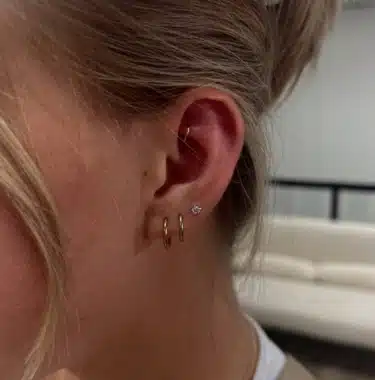
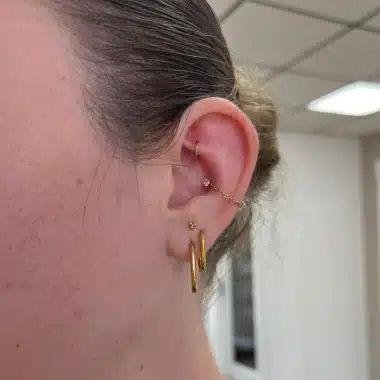
A few recent clients, mixing lobes with cartilage. Each one started with a placement conversation before the needle came out.


Once you're home
A little bleeding, swelling or tenderness in the first few days is normal. Following this routine is what keeps it from turning into anything worse.
Front and back, morning and night, with the aftercare solution we send you home with. Keep that up for eight weeks, then clean as needed.
No twisting, turning or fiddling with the jewelry. If you have to touch it, wash your hands first.
Skip swimming for two weeks. That covers pools, hot tubs, lakes and anything similar.
Lotion, makeup, hairspray and perfume all irritate a fresh piercing. Keep beauty and personal care products off and around it.
Coming back for a downsizeHelix, midi and flat piercings start on a longer post to leave room for swelling. Around 8 to 10 weeks in, come back and we'll swap it for a shorter one so the jewelry stops moving around and the piercing can finish healing.
Changing your jewelryWait until you can give the jewelry a gentle tug with no pain. After that, change it as often as you like, but keep something in. Even fully healed piercings can close.
From age five
We pierce kids' lobes with the same hollow needle and the same jewelry we use on adults. Anyone under 18 needs a parent or guardian there with photo ID. If your kid is nervous, that's normal, and we go at whatever pace they need.
Read our guide to kids' ear piercingBirthdays and bridal parties
Book your group together and the whole appointment is 10% off. It's popular for birthdays, bridal parties and friends who finally talked each other into a matching helix.
Plan a group bookingBefore you book
For most people, the lobe. It's soft tissue with no cartilage, so it's over in a second. Cartilage placements like the helix, rook and daith feel sharper and stay tender longer, though pain tolerance varies a lot from person to person.
Lobes take about 6 to 8 weeks. Cartilage takes about 6 to 12 months, and inner-ear placements like the conch, rook and daith can run longer. A piercing usually looks healed on the outside well before it's finished inside, so keep up the aftercare even when it feels fine.
Yes. Two or three in one visit is common, like a second lobe and a helix, or a pair of forward helix piercings. If you're getting more than one cartilage piercing, we'll usually suggest keeping them on the same side so you still have a side to sleep on.
Implant-grade titanium or 14k gold. We use flat-back studs, which sit flush against the ear and catch far less on hair, pillows and phones than a traditional butterfly back.
No. Every piercing is done with a single-use hollow needle that goes straight into a sharps bin afterward. A needle removes a clean channel of tissue, which heals more predictably and lands exactly where it was marked.
We pierce lobes from age five. Anyone under 18 needs a parent or guardian present with photo ID.
Yes, $20, and it comes off the cost of your piercing. If you cancel within 24 hours of your appointment, the deposit isn't refundable.
Books are open
Every open time is in the calendar. Pick the piercing you want, choose a slot, and we'll see you at the studio.
Aurilus, inside Heaven Sent SalonsClients come in from Lehi, Orem, Pleasant Grove, Highland, Alpine and Cedar Hills, and most are less than twenty minutes away.